Dear Darling London — Mayfair's Most Theatrical Nightclub
There are clubs in London that are good, and then there are clubs that make you feel like you've wandered into someone else's secret. Dear Darling is the second kind. Opened in September 2023 on Jermyn Street in the heart of Mayfair, it's built around a fictional aristocrat, hidden behind a wardrobe entrance, and runs one of the most distinctly curated two-floor experiences in the city. This is the full guide to what it is, how it works, and whether it's worth your night.
The Story Behind the Club
Dear Darling is the work of Ryan Bishti and his Cream Group, whose philosophy is described as "disruptive luxury" — venues designed so lavishly and so distinctly that guests with the means to go anywhere choose this instead. The design was handled by Fitzpatrick Design, and the opening night featured a DJ set from Skepta, which set the tone for the kind of crowd and credibility the venue was after from day one.
The building at 91 Jermyn Street has a history that the venue leans into knowingly — it previously housed a brothel and a gay club before becoming Oscar's Mayfair, and Dear Darling's theatrical concept acknowledges the address's layered past while building something entirely new on top of it. The fictional character at the centre of the concept is Lady Darling — a wealthy, recently widowed aristocrat who, the story goes, has invited her lover to meet her downstairs. The whole venue is framed as her private residence. It sounds like a conceit, but in practice it gives every design choice a logic and makes the experience feel like you're stepping into a world rather than a room.
The Ground Floor: Lady Darling's Living Room
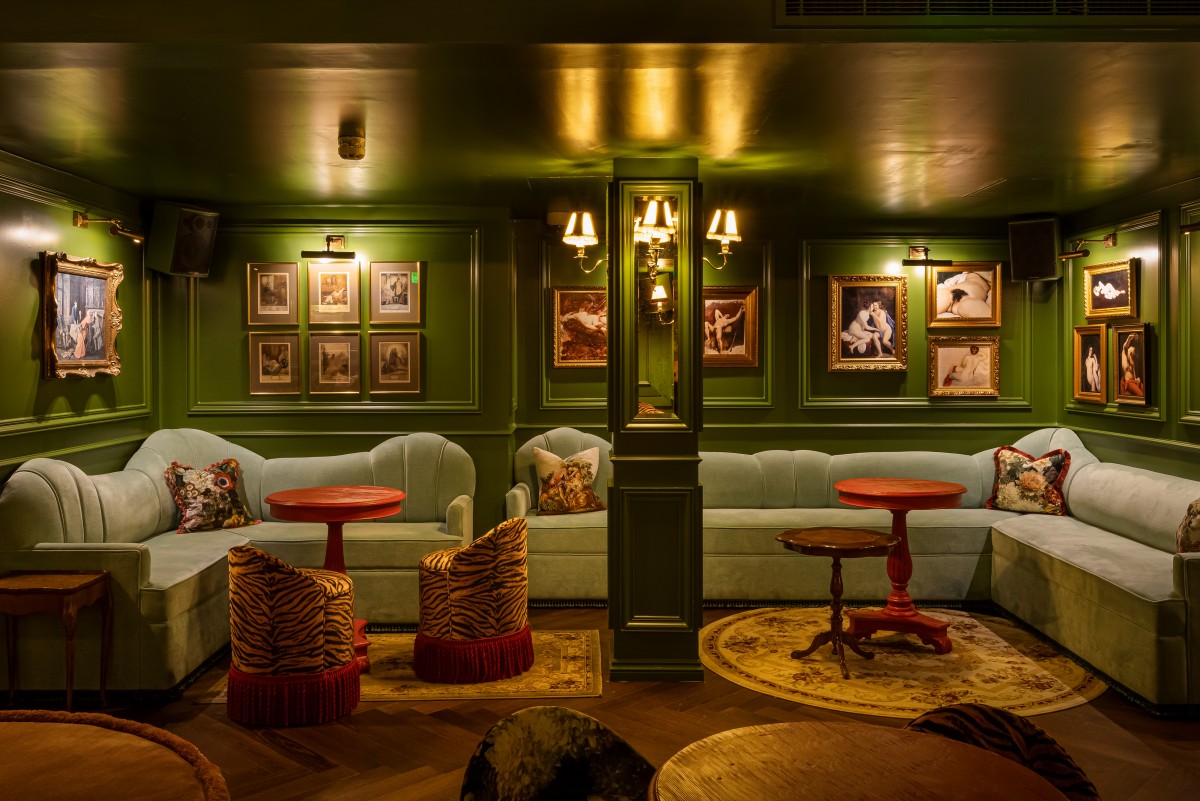
The upstairs space is styled as an elegant parlour — deep sofas, rich textures, flattering low lighting, and an atmosphere that leans more towards a very good private members' bar than a conventional club entrance. There are no harsh overhead lights, no queues to the bar stretching across the dancefloor. The music here is afro-house and melodic disco-house, the kind of thing you'd hear on a rooftop in Mykonos or a beach club in Ibiza — warm, rhythmic, social without demanding that everyone be on their feet at once.
The ground floor works well as the first half of the night. You arrive, you settle in, you get a cocktail and get your bearings. The room is designed for visibility — for conversations to happen and for groups to find each other — and the music sits at the right level for that during the earlier part of the evening before the crowd builds and the energy shifts.
The Basement: Through the Wardrobe
The lower level is where Dear Darling distinguishes itself from anything else currently operating in London. Access is through a hidden wardrobe entrance — a deliberate piece of theatre that separates the two floors both physically and atmospherically. Once you're through it, everything changes. Exposed brick, reflective surfaces, industrial detailing, and a glass floor that allows sightlines you wouldn't expect. The design is deliberately more charged and more raw than upstairs.
The music downstairs is hip-hop, R&B, Afrobeats, and Amapiano — open-format and high energy. Costumed performers work the floor, the lighting is more dramatic, and the no photos, no videos policy is firmly enforced. That last detail matters more than it might seem. A room where nobody has a phone in their face feels different from one that doesn't, and the performers and the atmosphere benefit from it. The basement is where the night properly kicks off and where most groups end up spending the bulk of their time once they've found it.
The Music Across Both Floors
What makes Dear Darling's two-room approach work is that the musical split is genuine — these aren't two DJs playing similar things in different rooms, they are genuinely different atmospheres with different sonic identities. Thursday nights feature European DJs on rotation, which tends to bring a harder edge to both floors. Fridays and Saturdays are the peak nights, when the crowd is at full capacity and the open-format downstairs set can run anywhere from Afrobeats into garage into R&B into hip-hop depending on the DJ and the room's energy.
The resident team understand the crowd well enough to read when to push and when to hold back, and the two-floor structure means that if one room isn't landing for you on a given night, the other one usually is. It's a better version of the same-room problem that plagues most single-floor clubs.
Cocktails, Food, and What to Drink
The cocktail programme carries its theme through without becoming gimmicky. The Darling's Delight — gin with elderflower, cucumber, and mint — is the lighter option; the Midnight in Mayfair — rum with chocolate bitters and orange zest — is the one to order when the night deepens. The techniques behind the menu involve clarified mixtures, fat-washed spirits, and quality base spirits throughout, which means the drinks hold up to the surroundings rather than being an afterthought.
Food is a late-night grazing menu rather than a full kitchen: premium beef sliders, seafood bites, truffle and caviar toppings. Nothing designed to fill you up, everything designed to sustain a long evening without requiring you to stop and eat properly. It's the right call for a venue at this level — you're not here for dinner and the menu doesn't pretend otherwise.
Table Bookings, Entry, and the Guestlist
Entry runs at approximately £20 on the door, often waived for guestlist arrivals before midnight — get on a list if you can. Table minimums start at around £1,000, with premium tables near the performance areas and dancefloor reaching significantly higher once bottle shows and high-end champagne are factored in. The bottle show format — performances with sparklers accompanying large orders — is taken seriously here rather than being a perfunctory gesture, and it contributes to the competitive spending energy that the venue is built around.
The dress code is smart and elegant and is enforced at the door without exception. High heels are expected for women; clean designer trainers are acceptable for men in the current era where streetwear and luxury have merged. The broader instruction is clear: this is not a casual venue and the door team will not let it become one. That strictness is part of what makes the inside work.
Who It's For
Dear Darling draws a specific crowd and it is not trying to be everything to everyone. The clientele skews towards high-spend international visitors, London professionals marking milestone occasions, and groups looking for an immersive night that goes beyond standing in a room with music on. Birthday bookings and celebration groups are well catered for — the bottle show format and the theatrical production elements are designed precisely for those moments. If you want a quiet drink and a conversation, this is not the right call. If you want a night that has a shape and a sequence and a room that rewards dressing properly for it, it is one of the better options London currently offers at this level.
See upcoming events, check availability and explore more London venues.
Should You Go?
If the concept appeals — theatrical, two-floor, immersive, Mayfair — then yes, absolutely. The Lady Darling framing gives the venue a coherence that most London clubs lack, the basement entrance through the wardrobe delivers on its promise, and the music across both floors is good enough to justify the spend. Get on a guestlist, dress properly, and go downstairs early enough in the night to get a feel for the space before it reaches full capacity. The hidden-room element loses some of its impact once you're in a packed crowd and everyone already knows it's there.
The most considered new opening Mayfair has seen in years. Two floors, two distinct worlds, one very good reason to dress up. The wardrobe entrance still lands even when you know it's coming, the basement delivers every time, and the cocktails are worth ordering. Book a table for groups of any size — walking in without one on a weekend is ambitious.
Discover More London Venues
Browse clubs, bars and late night spots across the city, all in one place.
Search London Venues